Barénia by Hermès Eau de Parfum
Barénia translates its namesake leather into a fragrance without a literal leather note: creamy butterfly lily, never before used in perfumery, dual-faceted patchouli, and toasted oak create a sensual woody chypre. A personal creation ten years in the making, Christine Nagel distills the identity of Hermès into an instinctive fragrance.
Olfactory Pyramid
Specification: Barénia by Hermès Eau de Parfum
|
Barénia by Hermès Eau de Parfum
- Warm and elegant leather-inspired scent
- Refillable bottle for sustainable use
- Suitable for both casual and formal occasions
Perfumer
Christine Nagel
Christine Nagel, a Swiss perfumer born in 1959 in Geneva to an Italian mother, distinguished herself through her training in organic chemistry after initially studying medicine. She began her career in research at Firmenich, where she became passionate about perfumery upon observing the emotional impact of scents. She developed unique skills in chromatographic analysis and olfactory recognition, and founded her own business in Italy, securing key contracts with brands like Fendi and Versace.
She created iconic successes such as Narciso Rodriguez for Her (2003, co-created with Francis Kurkdjian), Miss Dior Chérie (2005), and 46 fragrances for Jo Malone, including Wood Sage & Sea Salt. She joined Hermès in 2014, collaborating with Jean-Claude Ellena, and created perfumes such as Galop, Twilly, and Barénia.
She possesses synesthesia, which allows her to see and feel scents, enriching her approach to simple compositions without rigid gender boundaries. She has received awards from the Fragrance Foundation France, the François Coty Foundation, and the Marie Claire International Fragrance Awards, solidifying her innovative contribution to the industry.
Aromatic Notes
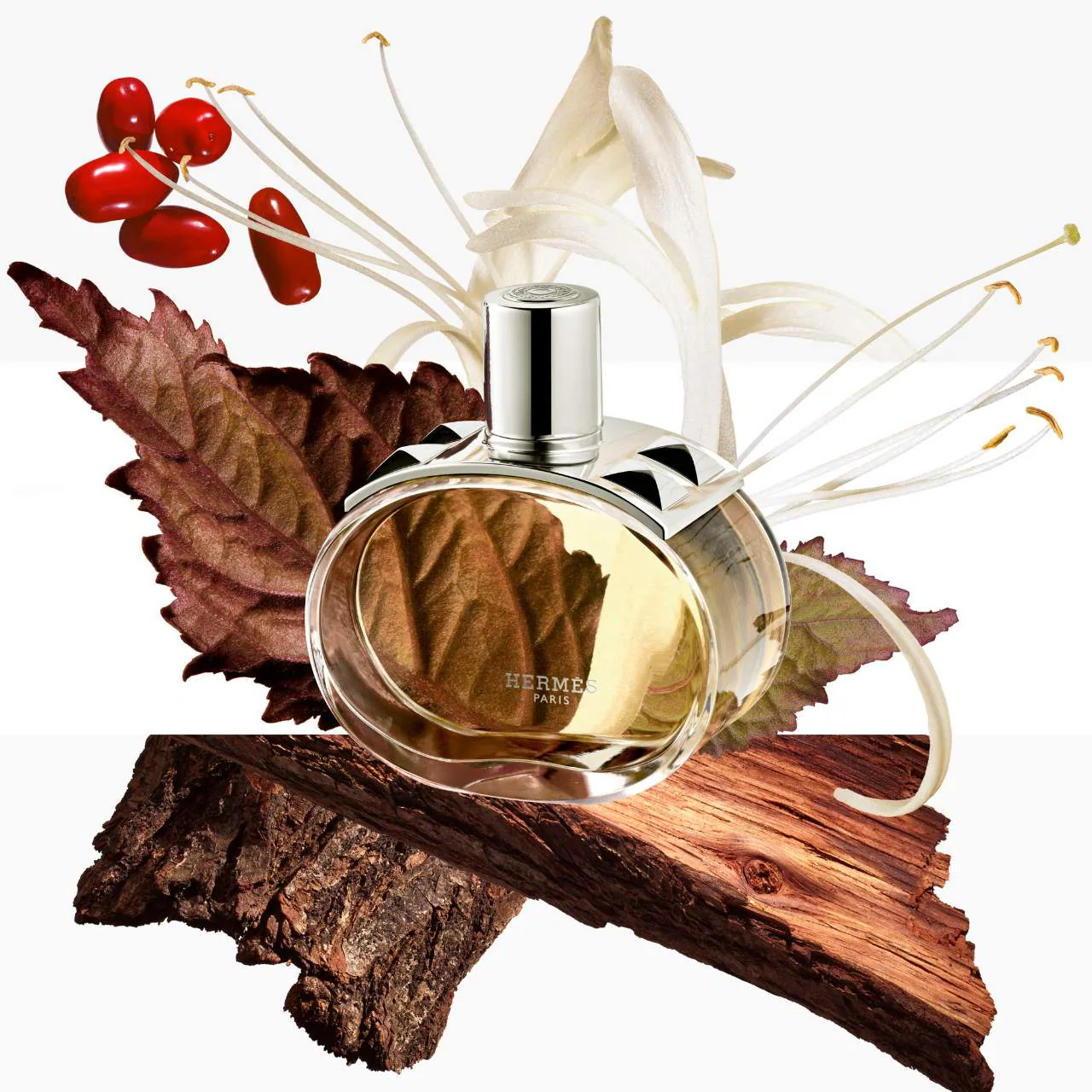
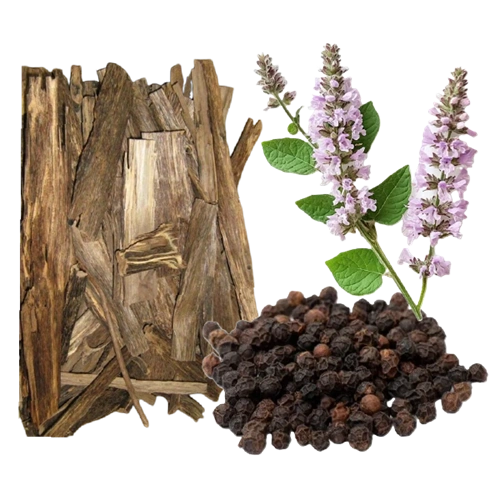
Hermès describes Barénia's key ingredients as butterfly lily, miracle berry, oak, and intense patchouli, wrapped in a structure true to the classic chypre.
Parfumo documents these same aromatic notes without specifying an evolutionary order: akigalawood, miracle berry, bergamot, white ginger lily, patchouli, and oak.
Fragrantica presents the composition in a pyramid structure:
| Source | Top Notes | Heart Notes | Base Notes |
|---|---|---|---|
| Fragrantica | Miracle Berry, Bergamot | White Ginger Lily | Akigalawood, Patchouli, Oak |
- Akigalawood, as mentioned in the sources, is a biotech ingredient developed by Givaudan that offers a modern interpretation of traditional patchouli through enzymatic synthesis of patchoulol (a chemical compound).
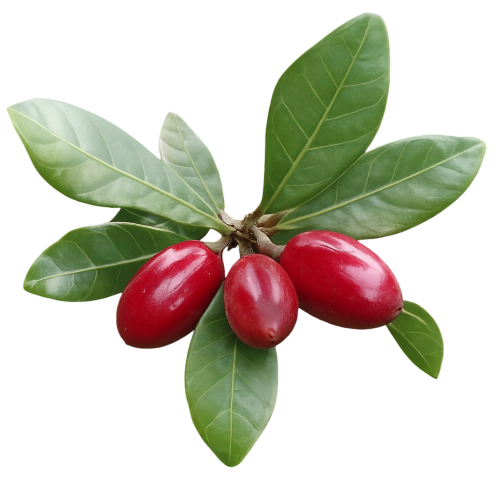
- The miracle berry is a red African fruit native to Ghana and Benin that contains miraculin, a glycoprotein that modifies taste perception.
- According to Nagel, Barénia combines a traditional patchouli with biotech akigalawood, creating a contrast between the classic and the innovative.
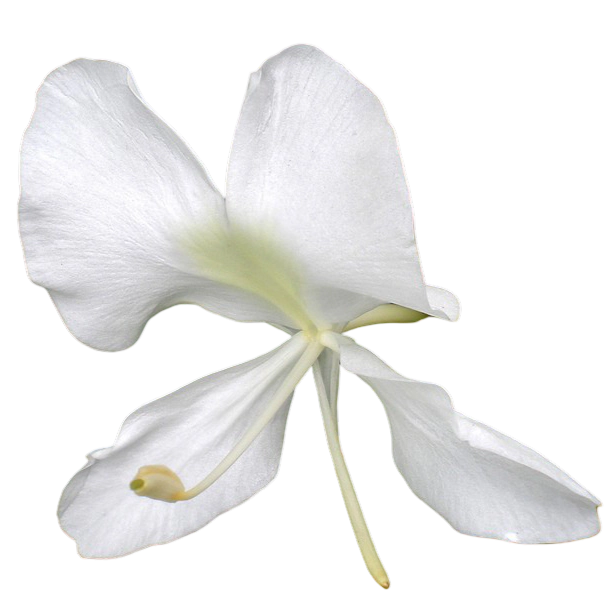
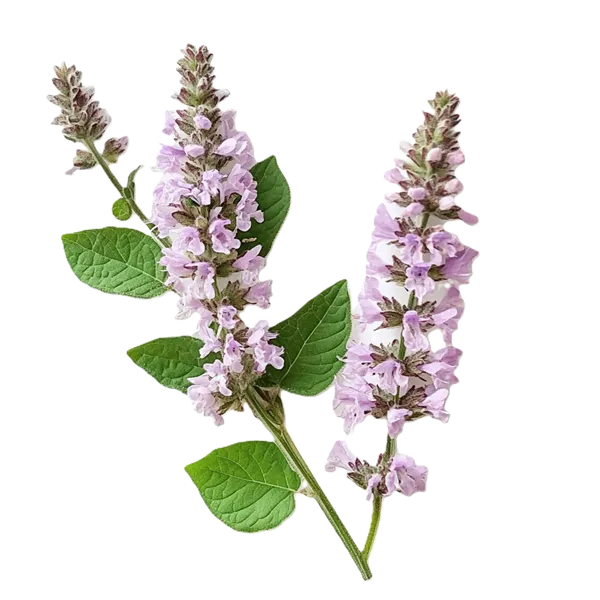
- The butterfly lily, also known as white ginger lily, is being used in perfumery for the first time in this creation.
Olfactory Family
Hermès explicitly defines Barénia as a classic chypre, highlighting its sensual woody character and its structure faithful to this traditional family:
| Source | Olfactory Family | Mentioned Accords |
|---|---|---|
| Hermès | Chypre | Warm, Sensual, Woody |
| Fragrantica | Chypre | Woody, Patchouli, Warm Spicy, Oud, Floral, Citrus, Fruity, Sweet, Earthy, Fresh Spicy |
| Parfumo | Floral-Woody | Floral, Woody, Fruity, Chypre, Spicy, Fresh |
Community platforms align with the official classification, though Parfumo initially characterizes the fragrance as floral-woody, later acknowledging chypre among its main accords.
According to the standard set by the French Society of Perfumers, Barénia belongs to the chypre family, specifically to the floral chypre subfamily, due to its bergamot-lily-patchouli-oak structure and the prominent role of the butterfly lily, which enriches the classic accord with distinguished floral nuances.
Olfactory Development
Barénia unfolds a woody chypre character that evolves with sensual elegance, from a fruity and citrusy opening that surprises with delicate sweetness, through an exotic floral heart with captivating presence, to a woody and earthy base that settles the composition with lasting depth and warmth.
Top Notes
15–30 minutes
Barénia's opening is characterized by a fruity-citrus freshness that balances sweetness and brightness, as Hermès highlights when describing the delicacy of the miracle berry wrapped in vibrant top notes.
The miracle berry, native to Ghana and Benin in West Africa, takes center stage in this phase with a lightly fruited profile, carrying apricot nuances that evoke the nectar of ripe apricots with a gentle touch.
Christine Nagel, the house's perfumer, explains that this small red berry contains miraculin, a molecule that coats the palate making bitter things taste sweet.
Bergamot, present in this phase according to Fragrantica, contributes a bright and effervescent citrus quality reminiscent of freshly squeezed green lemon zest, with its characteristic acidity adding clean, sparkling freshness.
This citrus note is considered essential to the classic chypre structure, as Nagel explains in Vogue, where she notes that every chypre must contain a hesperidic (citrus) top note to mark its archetypal identity.
Perceptions:
- At The Scented Devil an immediate fruity sweetness is described with woody and spiced nuances in the sillage, similar to oriental gourmand fragrances but without tipping into cloying territory, thanks to the balance between the miracle berry and the warm spices that emerge from the very start.
- Nagel herself describes in Elle the addictive feeling she was aiming to create: "I always wanted to come back and smell it again," referring to that immediately pleasurable opening that invites reapplication.
Several users on Fragrantica describe an opening that evokes champagne or cider, with that effervescent and acidic character that catches you off guard. Some pick up on apple and pear notes that reinforce that fruity impression, while others find the miracle berry's sweetness too intense in its first few minutes.
This duality seems intentional: Nagel wanted to create an accessible yet characterful chypre, and the opening delivers on that by drawing you in without overwhelming — stepping away from the traditional austerity of the chypre family.
Heart Notes
1–3 hours
The heart reveals an exotic and captivating floral phase that envelops with sensual elegance, dominated by the butterfly lily in a display unlike anything else in the Hermès collection.
The butterfly lily, known botanically as Hedychium coronarium and never before used in perfumery according to Nagel, brings a creamy white floral character with a light spiced edge, often compared to the scent of gardenia blended with soft ginger.
This tropical Asian flower, with its delicate white petals evoking butterfly wings, adds a fresh vegetal sensuality without the overwhelming density of more traditional white flowers like jasmine or tuberose.
The perfumer deliberately chose this note to move away from the classic opulent floral bouquet (rose/jasmine) of traditional chypre, seeking something more instinctive and less statuesque.
Fragrantica complements this by listing the butterfly lily in the heart phase as the sole note, underscoring its absolute leading role at this stage of development, where it blooms at full intensity before gradually merging with the base woods.
Perceptions:
- At The Scented Devil the floral heart is described as more subtle than in classic feminine chypres, allowing the woody notes and patchouli to peek through early, creating a fluid transition between phases rather than separate olfactory blocks.
- Mehriban (Parfumo) perceives an elegant balance between the floral and the woody from the heart onward, noting that the butterfly lily doesn't dominate aggressively but rather interweaves with warm woody nuances that prepare the entrance of the base.
- Nagel comments in Elle that the butterfly lily was key to honoring the spirit of the adventurous, instinct-driven women who inspired her — such as Isabella Bird and Peggy Guggenheim — bringing a femininity free from convention.
On Fragrantica, reviews agree that the butterfly lily manifests differently on each skin, adapting with an uncommon versatility. Most users find that the white flowers stay luminous without becoming overwhelming, maintaining an elegant and refined profile.
Several comments note that the floral heart blends harmoniously with a woody base that already begins to hint through, avoiding the typical phase separation that characterizes many classic chypres.
Base Notes
6–8 hours
The base solidifies a woody and earthy depth that lingers as a warm, enveloping veil on the skin, anchoring the composition in noble woods and an innovative patchouli.

Patchouli comes in two forms: a traditional earthy and damp patchouli that evokes dry leaves in a tropical forest after rain, with that almost medicinal and spiced character typical of fermented patchouli leaf; and akigalawood, a biotech molecule from Givaudan that Nagel describes as a modern patchouli.
Akigalawood offers clean, dry woody facets associated with synthetic oud but without its smoky intensity, contributing a creamy woodiness with notes of polished cedar and subtle sandalwood.
Oak contributes a robust, lightly toasted woody creaminess comparable to whiskey or rum barrel wood that has absorbed sweet liquids over the years.
Nagel mentions a "toasted oak" that evokes rum, suggesting almost caramelized and spiced notes that add warmth with a faintly indulgent quality, but without explicit sugar.
Fragrantica lists these three elements — patchouli, akigalawood, and oak — as the full base, creating a woody-earthy-creamy trio that defines the fragrance's drydown.
Perceptions:
- At The Scented Devil the woody base is noted as remaining warm and enveloping for hours, with the earthy patchouli balanced by the creaminess of akigalawood, avoiding the overly damp effect of vintage chypres while maintaining enough depth to anchor the composition.
- Nagel explains in Fragrantica News that this woody-patchouli base connects directly to the barénia leather that inspired the fragrance: "It has a very carnal side, a very elegant sensuality. This tactility is very important." Although there is no literal leather note in the pyramid, the combination of noble woods and patchouli evokes the velvety softness of barénia leather, described by artisans as "the leather that gives back the caress."
- Mehriban (Parfumo) perceives a soft and persistent drydown where the toasted oak blends with patchouli, creating a discreet but present sillage that lingers on fabric until the following day.
- Miguel Matos, columnist at Fragrantica News, celebrates Nagel's decision to create a chypre without oakmoss (banned under IFRA regulations), demonstrating that "the chypre can evolve while keeping its soul," thanks to the traditional patchouli-akigalawood pairing that reinterprets the classic structure with contemporary means.
Opinions on Fragrantica about the base show a notable consensus: multiple users describe a sensation of soft leather without any explicit leather note being present. Several comments specifically mention the scent of "luxury leather bag" or "high-end boutique," suggesting that the combination of noble woods and patchouli successfully evokes the tactile materiality Nagel was after.
Patchouli, while present, reads as well-integrated and never overbearing, remaining in balance with the creamy woods. Longevity tends to be described as moderate, with a sillage that stays close to the skin but perceptible with movement, and which some users report lingers on fabric until the next day.

Performance
Longevity | Projection | Sillage

Users on Fragrantica generally rate longevity and sillage as moderate. This balanced performance aligns with Barénia’s contemporary chypre structure, where biotech akigalawood and traditional patchouli anchor the composition without overwhelming it, allowing the butterfly lily and miracle berry to develop with sustained delicacy.
On Parfumo, user experiences point to solid performance, with wear time ranging from over 8 hours to a full day on skin, depending on individual skin chemistry. The sillage remains noticeable yet intimate, avoiding any harsh or overly aggressive projection.
Performance:
- Happyscents (Parfumo) reports very good sillage and longevity, perceiving the fragrance consistently from daytime into the evening.
- Basti87 (Parfumo) highlights strong overall performance, enjoying the scent for more than 8 hours, with particularly good sillage during the first few hours.
- Varanis Ridari, writing for The Scented Devil, notes that the woody base stays perceptible for hours, with moderate projection that remains elegant without becoming intrusive.
Occasions
Users on Fragrantica clearly favor fall as the preferred season, with spring following closely behind. Winter receives moderate support, while summer ranks lower. Daytime wear stands out as the primary use, with evening wear maintaining a moderate presence.
On Parfumo, fall and spring are evenly preferred, while winter and summer receive more moderate backing. For specific situations, everyday wear and leisure settings lead, followed by business environments with moderate support, while nights out and evening events are mentioned less frequently.
- Mélanie Nauche in Vogue calls it “the most elegant perfume of fall,” emphasizing its natural affinity with the transitional season, where its woody warmth emerges without becoming overpowering.
- Kathleen Hou in Elle underscores its multidimensional character and “multiple entry points,” making it suitable for formal settings where its fresher facets stand out, as well as for more intimate moments where its patchouli-woody sensuality comes forward.
- Lucas209 (Parfumo) highlights its versatility for everyday life, meetings, office wear, or relaxed walks, describing it as calm, approachable, and harmonious.

Creation
Perfumer | Philosophy | Composition

As she reveals to Kathleen Hou in Elle, this fragrance was not an official commission, but a personal desire that stayed with her for years: "It wasn't something anyone had asked me to do; it was just a personal wish."
The fragrance's genesis is deeply rooted in the history of Hermès. When Nagel joined the house in 2014, she knew from the start that she would create a chypre, considering it "the most beautiful of all structures" and a timeless archetype of perfumery that resonated with the character of the French house. However, as she explains to Mélanie Nauche in Vogue France, the chypre is also a "very codified" structure, which meant she needed to know the house deeply before daring to attempt it.
The decisive moment came during her visits to the Hermès leather workshops, where she fell in love with barénia, a leather described by the artisans as one that "returns the caress."
This exceptional leather, known for its carnal character and elegant sensuality, became the conceptual inspiration for the fragrance. The tactility of this material held particular meaning for Nagel, who found purpose in creating for "a house of craftsmanship," as she describes Hermès.
According to the official description, Barénia is a skin fragrance that reveals "a duality of strength and softness," expressing all the facets of an instinctive, captivating, free-spirited woman — a duality that mirrors precisely the qualities of the leather that gives it its name.
The Perfumer
Christine Nagel, Hermès perfumer since 2014, created Barénia as her first chypre for the house. Her approach was marked by unusual creative freedom: "I knew exactly where I was going — I think it's the fragrance I've created with the most freedom," she confides in Vogue France.
The creation was a process of gradual maturation. Nagel developed a genuine addiction to the fragrance during its development:
"I always wanted to come back and smell it again." This emotional bond ran so deep that when she finally presented the fragrance to artistic director Pierre-Alexis Dumas, her words were unequivocal: "If I had to make just one fragrance for Hermès, I want it to be this one."
For Nagel, inspiration also came from women who trusted their instincts to forge their own path: Alexandra David-Néel, Isabella Bird, Ella Maillart, Peggy Guggenheim, and Nancy Cunard. These adventurers, explorers, and patrons who defied the conventions of their time embody the spirit of the Hermès woman Nagel had in mind: instinct-driven, strong-willed, and free.
Technical Development
The classic chypre structure was honored but reinterpreted. Nagel explains that every chypre must contain specific elements: a citrus opening, an opulent floral bouquet (traditionally rose or jasmine), oakmoss, patchouli, and occasionally cistus.
For Barénia, she chose to move away from traditional flowers and selected the butterfly lily, a raw material that had never before been used in perfumery.
The most notable technical innovation lies in the combination of two types of patchouli: a traditional one and akigalawood from Givaudan, obtained through biotechnology. As Nagel reveals, "research, biotechnologies, synthesis — they all feed my relentless curiosity to dare new accords."
The most singular element of the fragrance is the miracle berry. The story behind its inclusion is telling: as a child, Nagel read in "Tales and Legends" about an African sorcerer who possessed a red berry capable of "turning bitter things sweet, even people's characters."
That image stayed with her. Years later she discovered that the miracle berry — a fruit containing miraculin — existed in Ghana and Benin. She ordered fifteen kilos to obtain an extract, but when the result wasn't convincing from an olfactory standpoint, she reconstructed its scent with a subtle apricot nuance through molecular analysis.

Bottle
Design | Materials | Symbolism
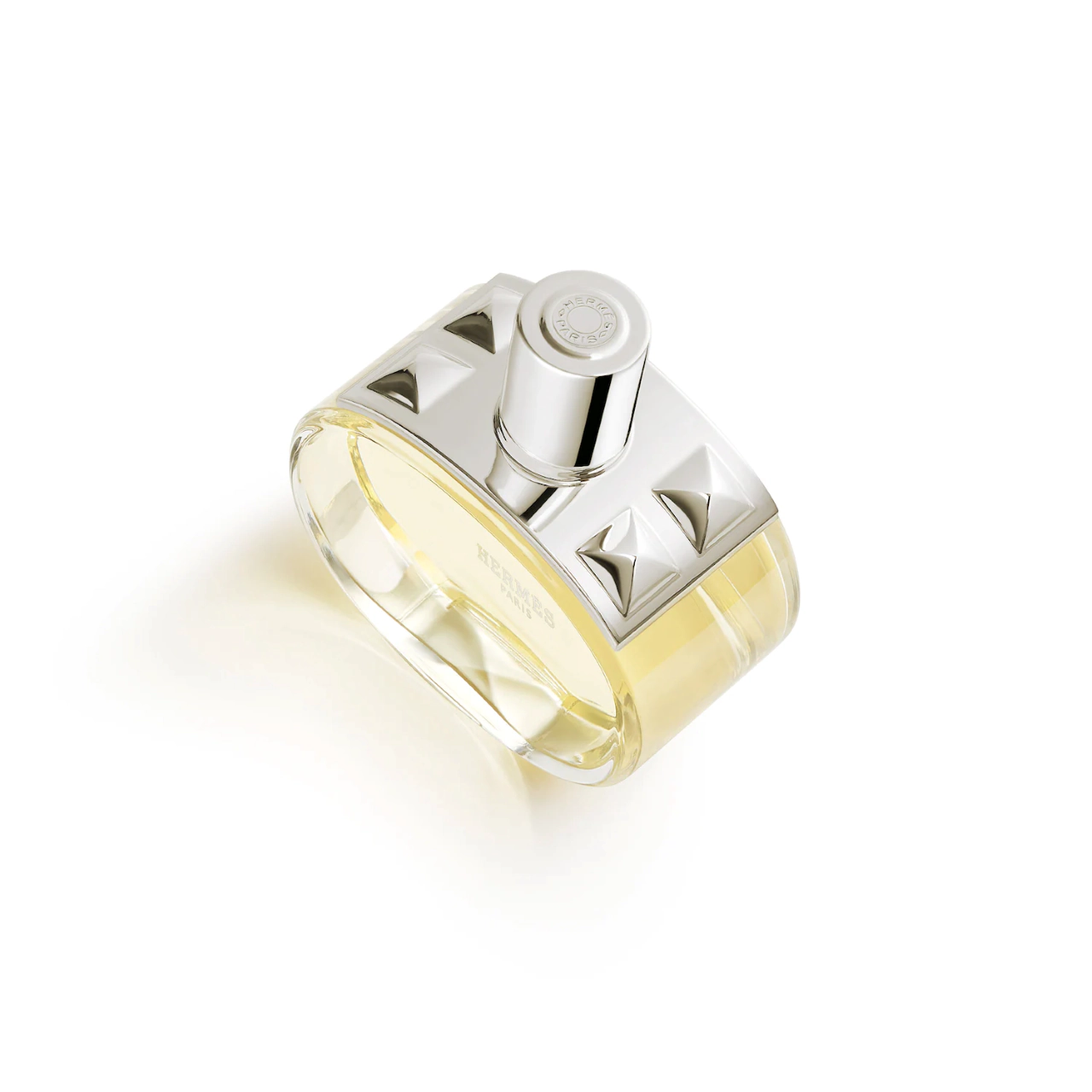
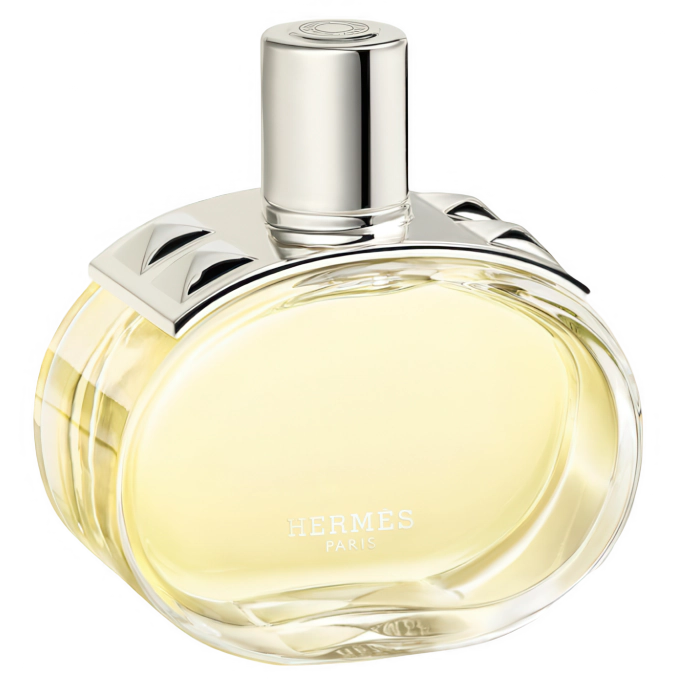
Barénia's bottle was created by Philippe Mouquet, object designer for Hermès, who drew inspiration from the house's iconic Collier de Chien cuff bracelet. As the brand explains, the bottle balances the power of its domed pyramidal studs with soft elliptical curves, creating a fusion of strength and delicacy that mirrors the fragrance's dual character.
This visual duality is intentional. Mélanie Nauche notes in Vogue France that when the team began discussing the name and Barénia appeared among the options, everything aligned immediately: the bottle inspired by the house's cuff bracelet resonated with a name that evoked the sensuality of Barénia leather.
The connection between design and concept was undeniable, and the result is an object that captures the essence of Hermès.
At the base of the bottle lies a distinctive detail: a final stud molded into the underside of the glass, visible when viewed from below. This refinement transforms the bottle into a jewel-like object, maintaining coherence with the aesthetic language of the brand's accessories.
Presentation
Barénia is available in three sizes: 30 ml (1.0 fl oz), 60 ml (2.0 fl oz), and 100 ml (3.3 fl oz). The design was conceived as a refillable object, intended to stand the test of time.
All three formats can be refilled using the separately sold 125 ml refill, extending the life of the original bottle while helping reduce material waste.

Campaign
Concept | Ambassadors | Narrative

The Polish model and actress, born in Kraków in 1977, with an extensive runway career at houses such as Givenchy, Balenciaga, and Comme des Garçons, as well as numerous Vogue appearances and a role in Luca Guadagnino's acclaimed horror film Suspiria (2018), brings a mature and magnetic presence that perfectly embodies the spirit of the fragrance.
The promotional video, released on September 11, 2024, on the house's official channel and shot by Nathaniel Goldberg, builds a visual narrative that weaves together Hermès' equestrian identity with the sensuality of Barénia leather.
The film, directed by James Gray with styling by Elodie David, opens with an intimate close-up of Bela wearing two leather cuffs — likely inspired by the iconic Collier de Chien bracelet that shapes the fragrance's bottle — dressed in tones that evoke the house's signature leather color.
The narrative alternates between the model and a horse running free through mountain landscapes, establishing a parallel between movement, instinct, and freedom. The sequence shows Bela shedding a coat to reveal a lighter outfit in beige and brown tones that reinforce the tactile connection to leather, as she moves between urban and natural settings.
A shot echoing the opening image of the horse serves as a visual bridge, evoking that duality between the wild and the refined. The climax arrives when the model, back in the mountains, raises her arms to the sky in a pure expression of energy and liberation. The film closes with the line "skin is a scent," a perfect distillation of the concept behind Barénia.
Christine Nagel describes the Hermès woman as "unstoppable, driven by curiosity and a real vitality, guided by her instincts — her detours are never mistakes," words that the campaign translates visually through Bela's performance.

Awards
Awards | Reviews | Recognition
Barénia has received multiple accolades since its 2024 launch, cementing its place as one of the most acclaimed women's fragrances of the year across international markets.
Fragrance Foundation France Awards 2025
At the Fragrance Foundation France Awards 2025, held at the Pavillon Gabriel in Paris on June 12, 2025, Barénia emerged as one of the night's biggest winners, taking home three awards from the professional jury in the feminine category:
- Best Fragrance
- Best Advertising Campaign
- Best Bottle
Sophie Normand noted in Fragrantica News that the recognition "rewards its consistency on every level and its undeniable creativity."
Academia del Perfume de España
The Academia del Perfume de España honored Barénia with two awards at the XVIII Edition of its 2025 prizes: Fragrance of the Year in the Feminine Category and Best Feminine Campaign.
Accademia del Profumo
In Italy, the Accademia del Profumo 2025 recognized Barénia in the category of Best Feminine Communication.
Editorial Accolades
- Elena Vosnaki included Barénia in her Valentine's Day Fragrance Selection for Fragrantica News in February 2025, describing it as "a surprising and valuable modern neo-chypre" that evokes "the feel of the finest-grain leathers beloved by the house's clientele."
- Linda G. Levy, president of The Fragrance Foundation, highlighted Barénia in Forbes' Best Luxury Perfumes for Women 2025 list as the Best Hermès Fragrance, calling it "a warm, earthy scent inspired by an iconic bag" and noting that "its uniqueness is part of what makes it special."
- Erin Lukas selected Barénia in The New Fall 2024 Fragrances That Will Be the Next It Scents for The Zoe Report as the Best Fall 2024 Fragrance for Leaning Into Leather Weather, noting that "the bold yet sensual scent and studded bottle are a nod to the heritage brand's iconic Barénia leather."
- Nerea Calvo included Barénia in her article 10 Luxury Perfumes That Stand the Test of Time and Will Be Your Allies This Winter for Harper's Bazaar España, describing it as "Hermès' most sensual and sophisticated fragrance," one that "fuses strength and delicacy."

Variations
Editions | Concentrations | Flankers
The Barénia line expanded in 2025 with the launch of its first variation, intensifying the original olfactory proposition:
| Name | Notes | Description |
|---|---|---|
| Barénia Eau de Parfum Intense (2025) | Patchouli, white lys papillon, leather, oak | Amplifies the softness of the lys papillon and the depth of the oak wood, with leather notes that emphasize the intensity of the absolute patchouli. The amber gradient bottle reflects this deeper concentration. Available in 30 ml, 60 ml, and 100 ml, with a 125 ml refill option sold separately. |
Barénia Intense was described by critics as a refinement of the original formula, offering greater dynamism and contrast with a more vibrant rose, less sweet leather, and notes that bring both light and depth to the composition. It is defined by stronger projection and longevity exceeding 12 hours, making it especially well-suited for fall and winter.
The Good
Analysis of positive reviews
The most frequent and favorable opinions on Hermès Barénia Eau de Parfum, based on 51 authentic reviews from forums and communities:
- Modern and elegant chypre: Many users describe it as a contemporary chypre that blends classic elegance with modern touches, highlighting its vibrancy and uncompromising character — ideal for those seeking something with real edge.
- Originality and freshness: Repeatedly mentioned as an innovative fragrance that breaks away from the sweet, repetitive trends of recent years, offering something refreshing and distinctive — like an olfactory miracle that surprises and doesn't try to please everyone.
- Earthy patchouli notes: The patchouli is praised for its earthy, dry, and non-sweet presence, adding depth and an astringent edge that makes it unique without being overwhelming.
- Miracle berry and leather combination: The miracle berry is celebrated for its intriguing sweet-tart effect, blended with a soft and sensual leather, evoking images like organic fruit from an expensive leather bag — or a berry-and-leather combo that simply captivates.
- Elegance and sophistication: It conveys a sense of understated richness and maturity — like the scent of a confident, bold woman, or old money radiating class without ostentation.
- Versatile unisex appeal: Several users perceive it as unisex, suitable for both men and women, with a balance that doesn't lean masculine or feminine, making it wearable across a wide range of personalities.
- Evolution on the skin: Its development is praised for moving from a bold, sparkling opening to a smooth, balanced dry-down, with shifts that keep interest throughout the day — from fruity to woody.
- Moderate longevity and sillage: It offers solid lasting power of 8 to 10 hours, with a noticeable sillage at first that softens over time — present without being intrusive.
- Favorable comparisons: Positively compared to fragrances like Coco Mademoiselle, Nomade, or Jour d'Hermès, yet stands out as more unique, less powdery, and with a spiced ginger lily twist that sets it apart.
- Sensuality and confidence: It evokes feelings of warm sensuality and self-assurance, making wearers feel like a bold French woman or someone who makes decisive choices — with a mysterious edge.
- Dry woody notes: Woods like akigalawood and oak are appreciated for their dryness, warmth, and spiced complexity, delivering a mysterious and well-balanced foundation without any mustiness.
- A break from cloying sweetness: Valued for breaking away from overly sweet or gourmand perfumes, offering a clean, sugar-free profile that feels refreshing in today's market.
- Praise for Christine Nagel: The perfumer is celebrated for her creativity, favorably compared to her peers, with compositions like this one cementing her legacy at Hermès.
- Daytime and fall occasions: Recommended for daytime wear, fall, or professional settings, given its versatility in elegant contexts such as offices or dinners — neither too youthful nor overly formal.
- Unconventional fruity quality: The fruity aspect, with hints of tart berries and citrus, is described as juicy and atypical — reminiscent of champagne or cider, but with a modern, non-cloying twist.
The Bad
Analysis of negative reviews
A summary of the most common criticisms of Hermès Barénia Eau de Parfum, based on 12 real reviews from forums and communities:
- Harsh and unpleasant opening: The first impression comes across as rough, scratchy, aggressive, or off-putting, triggering immediate rejection in most negative reviews.
- Dominant and bothersome patchouli: The patchouli is perceived as excessively present, earthy, vintage, or repulsive — one of the most criticized elements across negative reviews.
- Rough and chemical akigalawood: This synthetic note is described as harsh, metallic, overwhelming, and chemical; many reviewers point to it as the main flaw and their reason for writing off the fragrance entirely.
- Overly artificial and synthetic smell: Repeatedly described as smelling extremely artificial — like cheap air freshener, chemical notes, metallic flowers, or a failed experiment.
- Triggers headaches or physical discomfort: Several people report intense headaches, general discomfort, or the need to quickly discard the sample after trying it.
- Chemical and off-putting miracle berry: The miracle berry reads as ultra-sweet, artificial, unrealistic, and unpleasant — like a chemical fruit note that simply doesn't work.
User Reviews
Be the first to review “Barénia by Hermès Eau de Parfum” Cancel reply


There are no reviews yet.